
Industry is gathering scientific data to approach the regulator, DCGI, for a review of the suspension order.

Currently, the spend on R&D as a percentage of GDP is just 0.9%
.jpg)
In a letter to health minister Harsh Vardhan, the Indian Pharmaceutical Alliance, an industry body representing leading pharma companies, including Sun Pharma, Lupin, Dr Reddy's Labs, Cadila Health and Glenmark, stressed the need for an out-of-court settlement with health activists fighting for the rights of clinical trial participants.
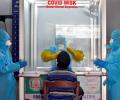
Cadila, Biocon developing rapid antibody testing kits; Eris, Mylan, Gland importing. There are two kinds of testing for the novel coronavirus - the real-time polymerase chain reaction test kit that uses throat or nasal swabs and provides results in a few hours, and the other is antibody-based rapid testing kit that use blood samples and provides results in a few minutes.

Pharma companies gear up for the 'new normal' as they train and align their sales forces for a paradigm shift. GSK leads the charge with staggered return-to-work, others plans yoga sessions and health care webinars for salesperson's family.

The government is expediting visa-related issues to bring technicians to India from any country, not just China, as and when required, to ensure the smooth implementation of the flagship production-linked incentive (PLI) scheme aimed at boosting domestic manufacturing. "If those under the PLI scheme need to get their equipment installed, we try to expedite the ability to get technicians into India from any country, whichever it may be," Union Commerce and Industry Minister Piyush Goyal told Business Standard in an interview.

'Given China's past behaviour and their territorial claims, should we be sceptical regarding China's willingness to adhere to these agreements fully? The answer is yes.' 'As Ronald Reagan famously said in the context of the SALT talks, 'Trust, but verify!' India should also do the same.' 'This has already begun with foot patrolling, drones, satellite imagery and so on. India's military deployment did mirror China's and will continue to do so in the future.'
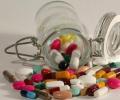
The intention of the government is to cap prices of drugs that are essential and which the public widely uses.

Multinational organizations including PepsiCo and industry associations like IPA, have come in favour of India's intellectual property regime, which is being reviewed by the US administration.
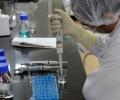
The western world had largely considered India to be a production hub, and also, a good potential geography for clinical trials, and a big market. But in Covid-19 research, Indian companies and government researchers are also researching new drug candidates and potential vaccines, says Prosenjit Datta.

The government said that "in exercise of extraordinary powers in public interest, conferred by paragraph 19 of the DPCO, 2013", the ceiling prices of 21 key formulations had been increased. These formulations include common medicines like BCG vaccines, penicillin, malaria and leprosy medicines (Dapsone), life-saving drugs like Furosemide (used to treat fluid build-up due to heart failure, liver scarring, or kidney disease), vitamin C, some common antibiotics, and anti-allergy medicines.

Besides opposing the suspension of three medicines, the sector has also questioned the process adopted by the government.
WHRL was founded in 1990 by Nobel laureate Sir John Vane to fund the research works at William Harvey Research Institute, one of the leading centres in the world for pharmacological research.

Ahead of this election, the alliance between the BJP and the SKM had broken down. One reason is the fear that like Article 370, Article 371F might also be changed.

A notice issued by the Indian Health Ministry at the weekend said that a government-appointed committee of experts had found that the banned combinations were "likely to involve risk to human beings, whereas safer alternatives to the said drug are available."
The $66 million (Rs 272.8 crore) Leiner Health Products is likely to sue DRL for the early divorce (the agreement has lasted only four years) from the alliance.

India had been engaged in a contentious battle with the US over the issue, especially in the pharmaceutical sector.

The next hearing on Pfizer's plea is slated for March 21
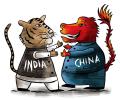
Indian auto and pharma industries import several critical components and raw materials from China.

The impact from NELM on the Indian pharmaceutical sector is estimated to be around Rs 6,000 crore.

If the concerns over risking political capital are overcome, the long-term gains for the Indian economy will be immense, asserts A K Bhattacharya.

Under the current administration, political attitudes toward IP seem to have improved.

Dispute over IPR was a bone of contention in bilateral ties till a couple of months ago.
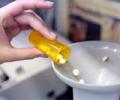
Roadblocks ahead as these medicines could face new clinical tests, more scrutiny

One reason Japan is betting highly on Indian pharma is that these companies have strong cash flows, low leverage and high debt capacity for medium to large sized acquisitions.

The National Pharmaceutical Pricing Authority will soon notify prices of as many as 150 packs of essential medicines in line with the new pharma pricing policy, according to official sources.

The scaling up of the India-US strategic partnership to the level of non-NATO ally with defence deals, sharing and transfer of defence technology, interoperability, joint collaboration and joint production of defence equipment has exacerbated Moscow's anxiety, notes Rup Narayan Das.
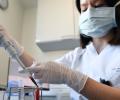
Many companies globally are working on plasma research to develop and manufacture hyperimmune globulin therapies from plasma donations.

Exports declined for the fourth-consecutive month by 10.3 per cent year-on-year to $34.98 billion in May, while the trade deficit widened to a five-month high of $22.12 billion. According to the data released by the commerce ministry on Thursday, key export sectors recording negative growth include petroleum products, gems and jewellery, engineering goods, ready-made garments of all textiles and chemicals. Imports also declined 6.6 per cent, six-month in a row, to $57.1 billion against $61.13 billion in the same month last year, the data showed.
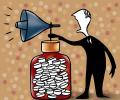
'Gift-giving' - from free dinners and drug samples to promotional merchandise - seems to be driving drugmakers' marketing - a marketing prescription deeply entrenched in the industry. This is a well-oiled racket that sees pharmaceutical (pharma) companies 'gifting' doctors to push their respective drugs under the guise of marketing. But is there a cure in sight to end this unhealthy alliance? The recent controversy following the income-tax raids on Bengaluru-based drugmaker Micro Labs, makers of popular paracetamol brand Dolo-650, has brought this to the fore, again.

India must be prepared to deal with climate disasters, geopolitical confrontations, and social strife linked to global events, asserts Jayant Sinha, chairman of Parliament's Standing Committee on Finance.

The category is expected to cross Rs 38,400 crore by 2020.

Gates, who is to attend the World Economic Forum's Annual Meeting, on Monday said there is reason to be optimistic than ever about the future progress using vaccines to give all children a healthy start to life.
More lucrative routinely prescribed drugs are at higher risk of failing quality standards

Next week, US Secretary of State John Kerry travels to India for the fourth annual US-India Strategic Dialogue

The founders of Gland Pharma, led by Ravi Penmetsa, and KKR, together own 96 per cent of the company.

Companies that are developing biosimilars (for regulated markets) or have portfolio of new chemical entities (NCEs) under development.
Indian pharma company Lupin has acquired 80 per cent stake in Kyowa Pharmaceutical Industry (Kyowa), one of the top 10 generic pharmaceutical companies in Japan, for an undisclosed amount.
